Stand-By Generator vs. Backfeeding a Portable: Why It Matters
Two ways to keep the power on during a rural outage: one is built for it, the other can put a line crew in danger without anyone meaning it to.
September 23, 2026 · 3 min read
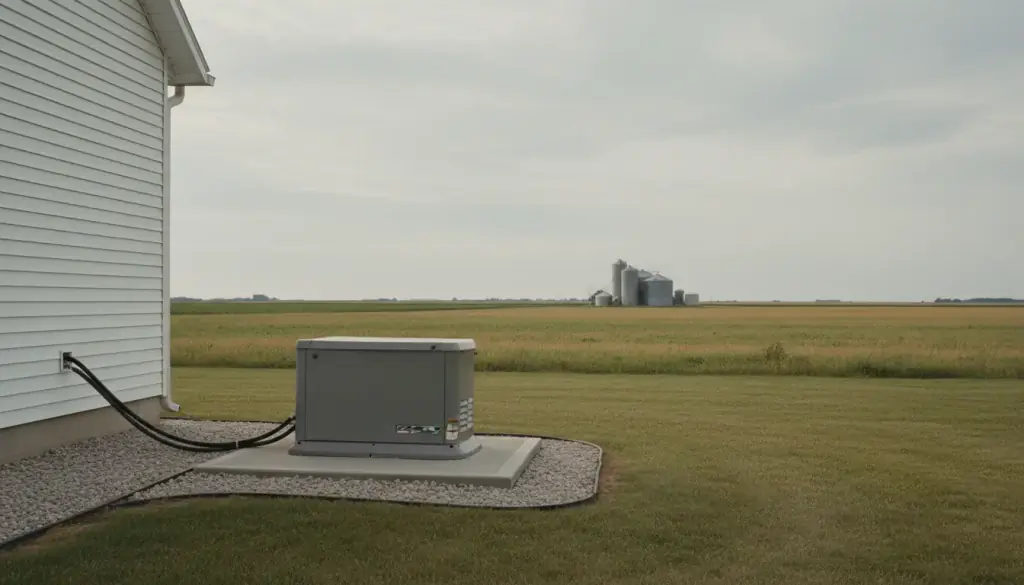
Rural power lines go down more than town lines do, usually from ice, wind or a tree across the right of way, and usually at the worst possible time. When the power is out for a day or more, a well, a sump pump or livestock water can turn a bad afternoon into a real problem. Two options usually come up: a portable generator run into the house somehow, or a stand-by unit that starts on its own. They are not the same kind of safe.
What a stand-by generator actually does
A stand-by generator sits outside on a pad, wired in permanently, and is paired with a transfer switch at the electrical panel. When utility power drops, the transfer switch isolates the house circuits from the incoming utility line before connecting them to the generator, so the two power sources are never tied together. Most run on natural gas or propane, so there is no fuel to store or rotate, and many can start on their own within moments of an outage, whether anyone is home or not.
Why a portable generator needs a transfer switch too
A portable generator is not the problem. Backfeeding one into a house through a dryer outlet or a similar shortcut, without a transfer switch, is. That connection pushes power backward through the house wiring and out onto the utility line, the same line a crew may be working on a few miles away, believing it is dead because the outage report shows the whole area is out. A transfer switch, whether built for a stand-by unit or a manual one sized for a portable, is what keeps that from happening, along with protecting the generator itself from damage when utility power returns unannounced. It also protects the generator from being fed power from the utility line while it is running, which can damage the unit just as easily as the backfeed can endanger a lineman.
- Backfeeding through a dryer or range outlet skips the isolation a transfer switch provides
- A live backfeed can travel out onto utility lines that crews believe are de-energized
- It can also damage the generator the moment utility power comes back unannounced
- A transfer switch lets a portable generator power the house safely; the missing cord to the dryer outlet does not
Sizing and placement are a conversation, not a guess
How large a generator a home or farm needs depends on which circuits have to stay live during an outage. A well pump and sump pump are a very different load than trying to run the whole house, and your electrician will size the unit and the transfer switch to the loads that actually matter to you. Placement matters too: a generator needs clearance from windows and doors for exhaust, and a stable pad set away from where snow or ice tends to drift, and away from a downspout or low spot that floods during heavy rain.
Fuel connections and the exercise cycle
A stand-by unit's gas or fuel connection is its own trade, and it belongs to whoever handles that line, whether that is a propane supplier or a gas utility, working alongside the electrician on the transfer switch and wiring. Once installed, most units are set to run a short self-test on a schedule the installer sets, cycling the engine briefly even when there is no outage. That exercise run is what keeps the battery charged and the engine ready rather than discovering a dead battery or a stuck starter on the one night the power actually goes out.
What to do after the power comes back
A stand-by unit typically runs a short exercise cycle on its own every so often, which keeps the engine and battery ready rather than sitting unused for a year until the one week it is actually needed. If you run a portable generator through a manual transfer switch during an outage, follow the shutdown order the installer set up: generator off before switching back to utility, so nothing is ever connected to both sources at once.
Dan's Electric Shop & Electro Electric installs stand-by generators and transfer switches for homes and farms across Noble and the Richland, Clay, Jasper and Wayne county area, with free estimates and a 24-hour weekend emergency line at 618-723-2515 for when the power actually goes out.
Dan's Electric Shop & Electro Electric, 618-723-2515
Call 618-723-2515More articles
Furnace Won't Start? What to Check Before You Call
A cold house at six in the morning does not always mean a big repair. Here is what you can safely check first.
Grain Bin Electrical: What to Check Before Harvest
Every bin fan and auger runs at once during harvest. A short check now beats finding a problem with grain on the ground.