Grain Bin Electrical: What to Check Before Harvest
Every bin fan and auger runs at once during harvest. A short check now beats finding a problem with grain on the ground.
September 23, 2026 · 3 min read
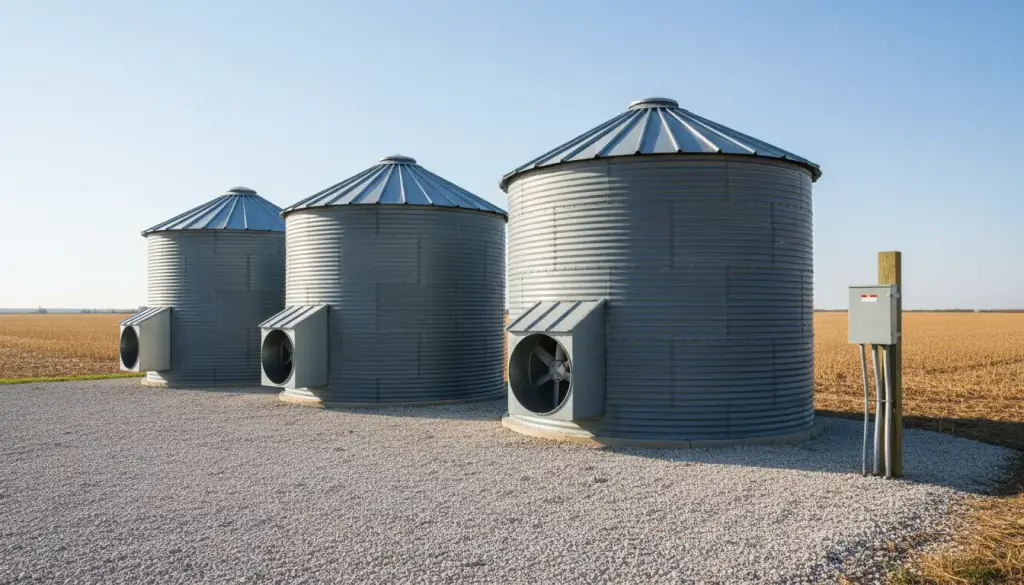
Harvest puts more electrical load on a farm at once than almost any other time of year. Bin fans, unload augers, leg motors and dryers can all be running together, often for days without a break, on wiring and disconnects that may not have been looked at since last fall. A short walk-through before the combines start rolling catches the problems that are easy to fix now and expensive to have fail mid-harvest.
Walk the disconnects first
Every bin fan, auger and leg motor should have its own disconnect within sight of the equipment, and each one should move freely and latch fully in both directions. A disconnect that is stiff, rusted, or will not seat all the way is a sign of corrosion inside, which is common on bins given the dust, moisture and temperature swings they sit in through the year. Open each one and look for a coating of corrosion on the contacts, or any sign that mice or other rodents have gotten inside the box. While the cover is off, check that the conduit entering the box is still sealed tight where it meets the enclosure, since a gap there is exactly how dust and moisture work their way in over a season.
Check fan and auger motors under load
A motor that hums but does not turn, or turns slower than you remember, is worth investigating before harvest rather than after the bin is full. Listen for a motor working harder than it should, and watch for a breaker that trips as soon as a fan or auger starts, which usually means the motor is drawing more current than the circuit was set up to carry. Long conduit runs out to a bin site are also worth a visual check for chewed insulation or connections that have worked loose from a season of vibration. Dust caked on a motor housing also traps heat that the motor would otherwise shed on its own, so a quick brush-off of the housing and vents while everything is already open is worth doing alongside the electrical check.
- Disconnects move freely and latch fully, no stiff or rusted handles
- No corrosion or rodent damage inside disconnect boxes
- Motors run at full speed without excessive noise or heat
- Breakers hold under load rather than tripping at startup
Label disconnects while everything is already open
A disconnect that is not labeled costs time at the one moment time actually matters, when a breaker trips at midnight and someone has to figure out which switch feeds which fan or auger before troubleshooting can even start. A laminated tag or a paint marker naming which bin, which leg or which auger each disconnect feeds turns a guessing game into a five-second check, and it costs nothing but a few minutes while everything is already open for a pre-harvest look. It is also worth walking the same route with a flashlight after dark once, since a loose connection or a hot spot can sometimes be spotted by smell or by a faint warmth at the box before it ever trips a breaker.
Weather-rated equipment matters at the bin site
Bin sites take a beating from dust, damp grain, and whatever the weather does that week, so equipment meant for wet or dusty locations holds up longer than standard indoor parts pressed into outdoor service. If a disconnect or junction box looks like it belongs in an indoor closet rather than a farmyard, that is worth flagging even if it is still working today, since it is more likely to be the thing that fails during the exact week you cannot afford downtime.
Why harvest is the wrong time to find out
When every bin fan and auger on the place is running at once, a marginal connection or an undersized disconnect tends to show itself right when you need it least, at two in the morning with a truck waiting to unload. A pre-harvest check does not take long, and catching a stiff disconnect or a chewed wire in late summer beats finding it once the bins are filling and there is no room to wait.
Dan's Electric Shop & Electro Electric wires farm systems and bins alongside houses and shops across Richland, Clay, Jasper and Wayne counties, and offers free estimates on pre-harvest checks. The 24-hour weekend emergency line, 618-723-2515, is there if something does fail once harvest is underway.
Dan's Electric Shop & Electro Electric, 618-723-2515
Call 618-723-2515More articles
Furnace Won't Start? What to Check Before You Call
A cold house at six in the morning does not always mean a big repair. Here is what you can safely check first.
Stand-By Generator vs. Backfeeding a Portable: Why It Matters
Two ways to keep the power on during a rural outage: one is built for it, the other can put a line crew in danger without anyone meaning it to.