Signs Your Geothermal System Is Leaning on Auxiliary Heat
A geothermal system that leans on auxiliary heat still keeps the house warm, which is exactly why the problem can go unnoticed until the bill arrives.
September 23, 2026 · 3 min read
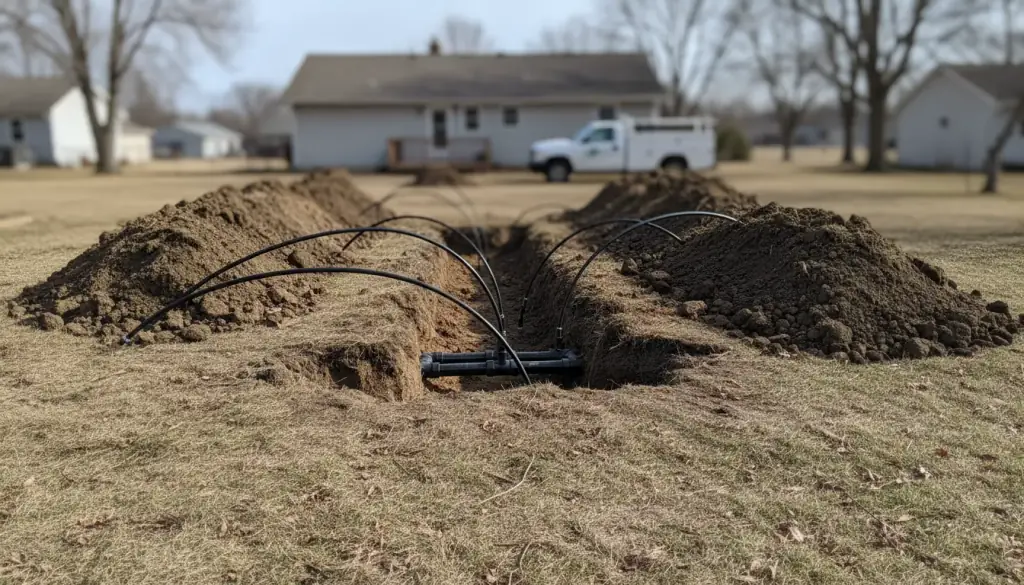
Geothermal systems are supposed to be the quiet, efficient option, drawing steady ground temperature through a buried loop instead of burning fuel or straining through a cold outdoor coil. When a geothermal system starts leaning hard on its backup electric resistance heat, sometimes called auxiliary or emergency heat, it is usually still keeping the house warm, which is exactly why the problem can go unnoticed for a while. The bill is often the first real clue.
What auxiliary heat is for
Most geothermal heat pumps include a bank of electric resistance elements as backup, meant to help on the coldest mornings or to recover quickly after the thermostat has been set back overnight. Used occasionally, that is the system working as designed. Used constantly, or running whenever the thermostat calls for heat instead of only on the hardest days, that is a sign the heat pump side is not carrying its share of the load anymore, and it is also the most expensive way to heat the house, since resistance heat costs more to run than the heat pump it is standing in for.
Why a geothermal loop is different from a furnace or a standard heat pump
A furnace burns fuel to make heat. A standard air-source heat pump pulls heat out of the outdoor air, which gets harder the colder that air gets. A geothermal system instead draws from a buried loop of fluid that sits at a fairly steady ground temperature year round, well above the coldest outdoor air temperature in a bad stretch of winter, which is normally what lets it run efficiently even on the days a standard heat pump struggles. That steadiness is also why a geothermal system leaning hard on auxiliary heat is worth paying attention to. Something in that loop, in the heat pump, or in the wiring between them is not doing what a properly running system should be doing.
Signs the heat pump is not pulling its weight
A thermostat that shows an auxiliary or emergency heat indicator far more often than expected is the clearest sign. Longer run times to reach the same set temperature, a system that used to keep up on a cold day and now cannot, or a heating bill that jumps well past what the season alone explains are all worth paying attention to. None of these prove exactly what is wrong on their own, but together they are a reason to have the system looked at before the coldest part of winter arrives.
- Auxiliary or emergency heat indicator lit more often than a truly cold snap explains
- Longer run times to reach the same thermostat setting
- A heating bill that climbs beyond what colder weather alone accounts for
- A system that used to keep the house comfortable and now struggles
What a system analysis actually checks
Before anyone replaces a part, a proper geothermal analysis looks at the whole loop as one system: the flow and temperature of fluid moving through the ground loop, temperatures across the heat pump itself, and the electrical draw the unit is pulling compared to what it should be pulling. Loop pressure loss, a struggling circulator pump, or a heat pump locking out on low flow can all produce the same symptom at the thermostat, leaning on auxiliary heat, for very different underlying reasons, so the diagnosis has to come before the repair.
Why an electrical-and-HVAC shop suits this kind of system
A geothermal system sits right at the seam between electrical work and HVAC work. The circulator pumps, the heat pump's compressor and controls, and the electrical draw all have to be read together to make sense of what is happening. A shop that handles both sides under one roof does not have to hand the job between two different trades to figure out whether the problem is electrical, mechanical, or in the ground loop itself, and that matters most on the coldest week of the year, when the house cannot sit and wait for two separate visits to compare notes.
Dan's Electric Shop & Electro Electric offers geothermal system analysis, repair and new install across Noble and the Richland, Clay, Jasper and Wayne county area, with free estimates and a 24-hour weekend emergency line at 618-723-2515.
Dan's Electric Shop & Electro Electric, 618-723-2515
Call 618-723-2515More articles
Furnace Won't Start? What to Check Before You Call
A cold house at six in the morning does not always mean a big repair. Here is what you can safely check first.
Grain Bin Electrical: What to Check Before Harvest
Every bin fan and auger runs at once during harvest. A short check now beats finding a problem with grain on the ground.